What is defined as "a set of words to be spoken by actors..."?
2.
What replaced suspense in ancient Greek plays?
3.
Which citizens could not serve as actors?
4.
From the worship of which Olympian god did Greek drama arise?
5.
What title does Thespis merit?
6.
Who was the favorite source of the Greek dramatists?
7.
In a single word, what is hubris?
8.
What device did Greek actors use to express emotions that distant spectators could see?
9.
What was a Greek actor's most valuable asset?
10.
What city served as the cultural center of drama?
Bonus
A.
List Aristotle's "Three Unities" by their titles.
B.
C.
The Greek Theater: Version 2
Great BooksMr. Reed
Name Date Period
1.
Who produced, performed, and viewed the ancient Greek dramas when they were first created?
2.
What element of plot serves instead of suspense in Greek dramas?
3.
How did the Greek treatment of violence in a play differ from our own?
4.
Which citizens could not serve as actors?
5.
From the worship of which Olympian god did Greek drama arise?
6.
Who was the favorite source of material for Greek playwrights?
7.
In a single word, what is hubris?
8.
What was a Greek actor's most valuable asset?
9.
Who is traditionally reputed to have introduced the first actor, earning himself the title "the Father of Drama"?
10.
What term identifies the group of actors who sang or chanted their lines in unison, serving as commentators on the drama?
Bonus
A.
Name the three great Greek tragedians whose combined thirty-three extant plays constitute our only examples of classical tragedy.
B.
C.
Agamemnon 1
Great BooksMr. Reed
Name Date Period
1.
Where is the play set?
2.
What group comprises the Chorus?
3.
Name one of the two people whom the Chorus blames for the war.
4.
In the omen the Chorus speaks about, what animal do eagles rip open?
5.
Whom does Agamemnon sacrifice in order to get a favorable wind for his fleet bound for Troy? [I want the name.]
6.
What is that person's (#5) relationship to Agamemnon?
7.
What news does the Watchman relay to Clytemnestra?
8.
According to Aristotle, how much time should the ideal play cover?
9.
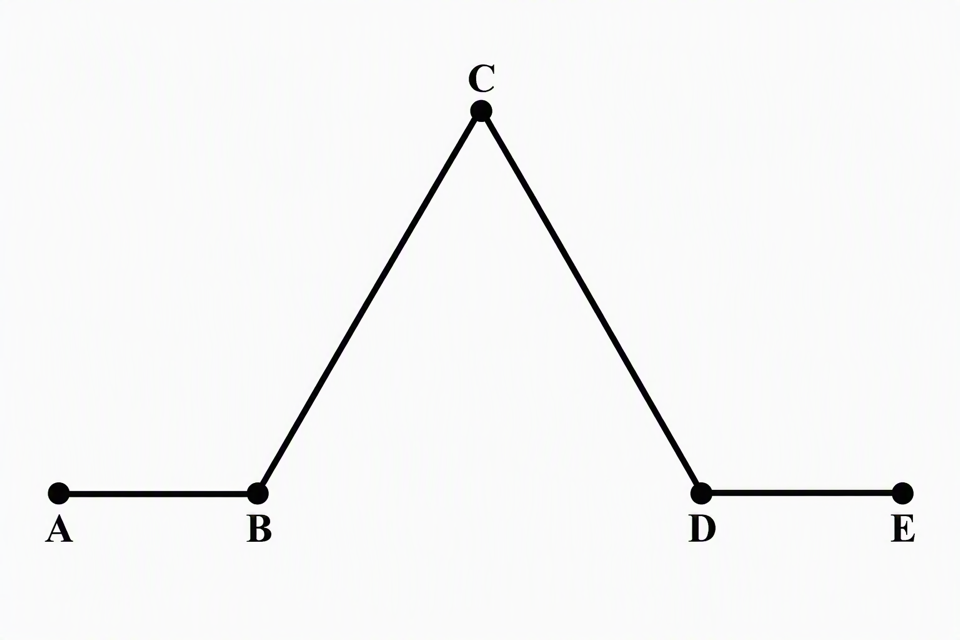
In the plot diagram below, what does line segment AB represent?
10.
Which citizens were forbidden to be actors?
Bonus
A.
Who is the father of Greek drama?
B.
The worship of which god is connected with the origins of drama?
Agamemnon 2
Great BooksMr. Reed
Name Date Period
1.
What term is defined as "a set of words spoken by actors which pretend to unfold certain events as well as the thoughts and feelings of two or more characters"?
2.
What is hubris?
3.
What acting "tool" did ancient Greek actors use more than any other?
4.
What term is defined as "the release and relief of emotion achieved through vicarious participation in the action of the drama"?
5.
On whom does Agamemnon place the responsibility for the sack of Troy?
6.
According to Agamemnon, what emotion is inspired in others by people who are powerful or prosperous?
7.
What emotion does Clytemnestra claim to have experienced for most of the past ten years?
8.
Whom has Clytemnestra sent to live with Strophius the Phocian?
9.
What does Clytemnestra urge Agamemnon to do? [Even though he says that it would not be right, he does so in the end.]
10.
Where is Cassandra from?
Bonus
A.
What is the third unity - after Time and Place?
Agamemnon 3
Great BooksMr. Reed
Name Date Period
1.
What gift did Apollo bestow upon Cassandra?
2.
What is the curse he bestowed upon her?
3.
When Cassandra speaks, how does the Chorus respond?
4.
What is the basic message about Orestes in Cassandra's words?
5.
What insult does the Chorus hurl at Aegisthus? [It is the reverse of the one the Watchman hurled at Clytemnestra earlier.]
6.
Is the actual killing of Agamemnon best identified as the INCITING FORCE, the CLIMAX, or the CATASTROPHE of the plot?
7.
Where does Clytemnestra kill Agamemnon?
8.
Is the Watchman's speech at the beginning of the play - along with the Chorus's opening ode - a part of the COMPLICATION, EXPOSITION, or RESOLUTION?
9.
Of what crime are both Agamemnon and his father, Atreus, guilty? [Be specific!]
10.
According to Aeschylus, what experience brings wisdom?
Agamemnon: Plot Summary
Great BooksMr. Reed
Name Date Period
Use complete sentences to answer the question below. You will be graded on the correctness of your answer, the completeness and coherence of your sentences, and the accuracy of your grammar. You will have about five minutes to complete your answer.
Summarize the plot of the Agamemnon. Be sure to identify the inciting force, climax, and catastrophe.
Agamemnon: Cumulative Quiz
Great BooksMr. Reed
Name Date Period
1.
Where is the play set?
2.
What group comprises the Chorus?
3.
Name one of the two people whom the Chorus blames for the war.
4.
In the omen the Chorus speaks about, what animal do eagles rip open?
5.
Whom does Agamemnon sacrifice in order to get a favorable wind for his fleet bound for Troy? [I want the name.]
6.
What is that person's (#5) relationship to Agamemnon?
7.
What is hubris?
8.
On whom does Agamemnon place the responsibility for the sack of Troy?
9.
According to Agamemnon, what emotion is inspired in others by people who are powerful or prosperous?
10.
What emotion does Clytemnestra claim to have experienced for most of the past ten years?
11.
Whom has Clytemnestra sent to live with Strophius the Phocian?
12.
What does Clytemnestra urge Agamemnon to do? [Even though he says that it would not be right, he does so in the end.]
13.
Where is Cassandra from?
14.
What gift did Apollo bestow upon Cassandra?
15.
What is the curse he bestowed upon her?
16.
Why does Cassandra go willingly to her death?
17.
What insult does the Chorus hurl at Aegisthus? [It is the reverse of the one the Watchman hurled at Clytemnestra earlier.]
18.
Where does Clytemnestra kill Agamemnon?
19.
Of what crime are both Agamemnon and his father, Atreus, guilty? [Be specific!]
20.
According to Aeschylus, what experience brings wisdom?
Bonus
A.
Is the Watchman's speech at the beginning of the play - along with the Chorus's opening ode - a part of the COMPLICATION, EXPOSITION, or RESOLUTION?
B.
Is the actual killing of Agamemnon best identified as the INCITING FORCE, the CLIMAX, or the CATASTROPHE of the plot?
The Libation Bearers 1
Great BooksMr. Reed
Name Date Period
1.
What offering does Orestes lay upon Agamemnon's grave?
2.
Identify the significance of that gift. [You may give either of two meanings.]
3.
Who constitutes the Chorus?
4.
Who sent the Chorus to mourn at Agamemnon's grave?
5.
How does Electra's reaction to Orestes' revelation of himself parallel Penelope's reaction to Odysseus' revelation of himself?
6.
Who sent Orestes home to Argos?
7.
For what purpose did that person (#6) send Orestes back to Argos?
8.
What is the central animal symbol in Clytemnestra's dream?
9.
Whom must that animal represent?
10.
Define libation.
Bonus
A.
Identify Thyestes by kinship relationship to Agamemnon.
The Libation Bearers 2
Great BooksMr. Reed
Name Date Period
1.
What do Althaea, Scylla, Clytemnestra, and the women of Lemnos all have in common?
2.
What message does Orestes—in the guise of a traveler— bring to Clytemnestra?
3.
What is Clytemnestra's public emotion when she hears the news the traveler brings?
4.
What is her private emotion?
5.
What is Cilissa's occupation?
6.
What special instructions do the Chorus give to Cilissa concerning the message to Aegisthus?
7.
When Clytemnestra almost dissuades Orestes from killing her, what authority does Pylades remind Orestes of in order to persuade him to kill his mother?
8.
What "prop" does Orestes hold up as he explains why he has killed his mother?
9.
To which god will Orestes now go for purification?
10.
Define nemesis.
Bonus
A.
Who is punished in Hades by unrelieved hunger and thirst?
The Libation Bearers: Cumulative Quiz
Great BooksMr. Reed
Name Date Period
1.
What offering does Orestes lay upon Agamemnon's grave?
2.
Identify the significance of that gift. [You may give either of two meanings.]
3.
Who constitutes the Chorus?
4.
Who sent the Chorus to mourn at Agamemnon's grave?
5.
How does Electra's reaction to Orestes' revelation of himself parallel Penelope's reaction to Odysseus' revelation of himself?
6.
Who sent Orestes home to Argos?
7.
For what purpose did that person (#6) send Orestes back to Argos?
8.
What is the central animal symbol in Clytemnestra's dream?
9.
Whom must that animal represent?
10.
Define libation.
11.
What do Althaea, Scylla, Clytemnestra, and the women of Lemnos all have in common?
12.
What message does Orestes - in the guise of a traveler - bring to Clytemnestra?
13.
What is Clytemnestra's public emotion when she hears the news the traveler brings?
14.
What is her private emotion?
15.
What is Cilissa's occupation?
16.
What special instructions do the Chorus give to Cilissa concerning the message to Aegisthus?
17.
When Clytemnestra almost dissuades Orestes from killing her, what authority does Pylades remind Orestes of in order to persuade him to kill his mother?
18.
What "prop" does Orestes hold up as he explains why he has killed his mother?
19.
To which god will Orestes now go for purification?
20.
Define nemesis.
Bonus
A.
Who is punished in Hades by unrelieved hunger and thirst?
B.
Identify Thyestes by kinship relationship to Agamemnon.
Eumenides 1
Great BooksMr. Reed
Name Date Period
1.
What is the occupation of the Pythia?
2.
Why does Orestes go to Delphi?
3.
Who awakes the Furies there to pursue Orestes?
4.
Where does Apollo next send Orestes?
5.
Who constitutes the Chorus?
6.
What do they (#5) profess their divine task to be?
7.
Why did they (#5) not pursue Clytemnestra?
8.
Who is the mother of the Erinyes?
9.
Who is the judge at Orestes' trial?
10.
What innovation does the judge (9) propose for this trial?
Eumenides 2
Great BooksMr. Reed
Name Date Period
1.
Apollo plays the role of which official of the court?
2.
According to Apollo, who backs his testimony and his prophecies?
3.
According to Apollo, why can it be said that Orestes is not blood kin to Clytemnestra?
4.
How many of the jurors vote for acquittal?
5.
How do the Erinyes attempt to influence the jury?
6.
Who casts the deciding vote in Orestes' trial?
7.
What new name does Athena give the Erinyes?
8.
What does that new name mean?
9.
Who constitutes the second Chorus?
10.
According to Athena, does fear promote or impede justice?
Bonus
A.
Name one of the two great Greek tragedians - other than Aeschylus.
B.
Name the great Greek comic dramatist.
Eumenides: Cumulative Quiz
Great BooksMr. Reed
Name Date Period
1.
What is the occupation of the Pythia?
2.
Why does Orestes go to Delphi?
3.
Who awakes the Furies there to pursue Orestes?
4.
Where does Apollo next send Orestes?
5.
Who constitutes the Chorus?
6.
What do they (#5) profess their divine task to be?
7.
Why did they (#5) not pursue Clytemnestra?
8.
Who is the mother of the Erinyes?
9.
Whom do they serve?
10.
Who is the judge at Orestes' trial?
11.
Apollo plays the role of which official of the court?
12.
According to Apollo, who backs his testimony and his prophecies?
13.
Who claims that Orestes is not blood kin to Clytemnestra?
14.
How many of the jurors vote for acquittal?
15.
According to Athena, does fear promote or impede justice?
16.
How do the Erinyes attempt to influence the jury?
17.
Who casts the deciding vote in Orestes' trial?
18.
What new name does Athena give the Erinyes?
19.
What does that new name mean?
20.
Of whom are they now the patrons?
Bonus
A.
Name one of the two great Greek tragedians - other than Aeschylus.