Review of Inferno
A brief review of Inferno for new participants joining the Purgatorio study.
Use ↓ or → to move through the slides.
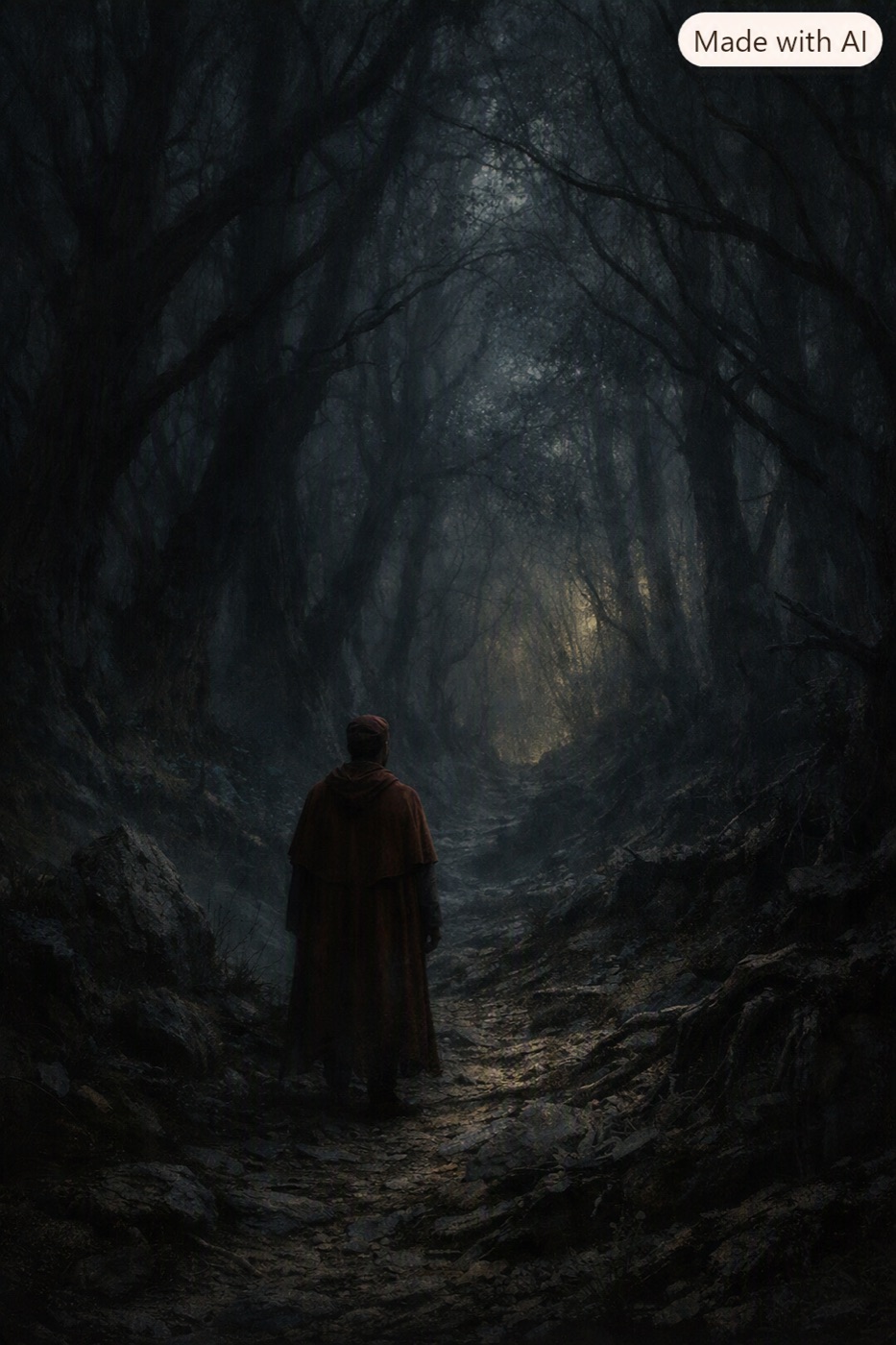
Entering the Dark Wood
Inferno: A 34 Canto Descent
A brief review for new participants joining our Purgatorio study.
Dante’s journey begins in confusion, fear, and spiritual crisis.
Dante’s World: Sources & Influences
- Christian Scripture and theology
- Classical epic tradition (Virgil, Homer, Ovid, Lucan)
- Aristotelian ethics (via Aquinas)
- Medieval Florence: politics, exile, corruption

Dante’s Purposes
- Moral: Reveal sin’s true nature
- Spiritual: Chart the soul’s ascent
- Political: Critique corruption
- Poetic: Elevate the Italian vernacular

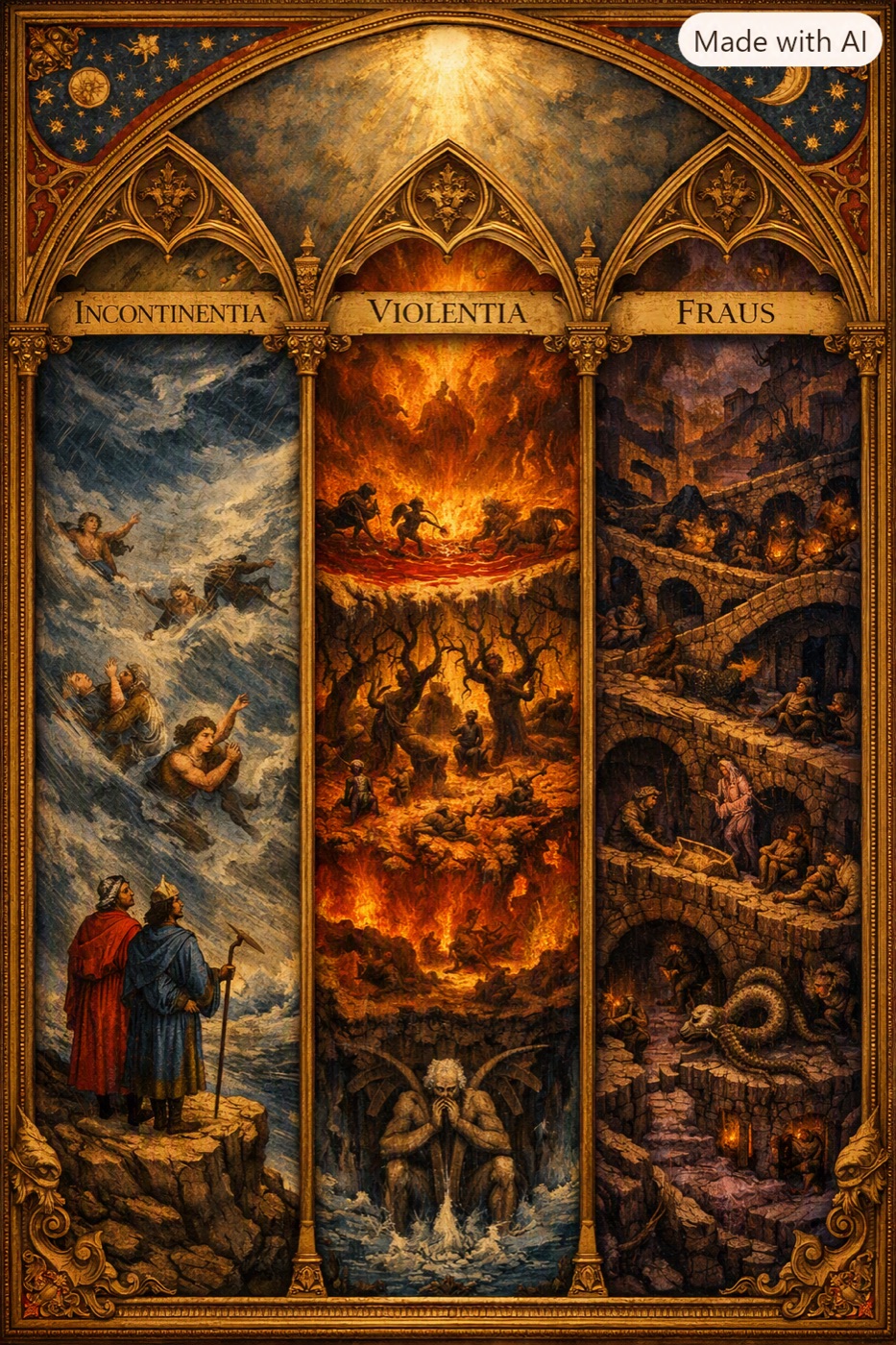
The Three Divisions of Sin
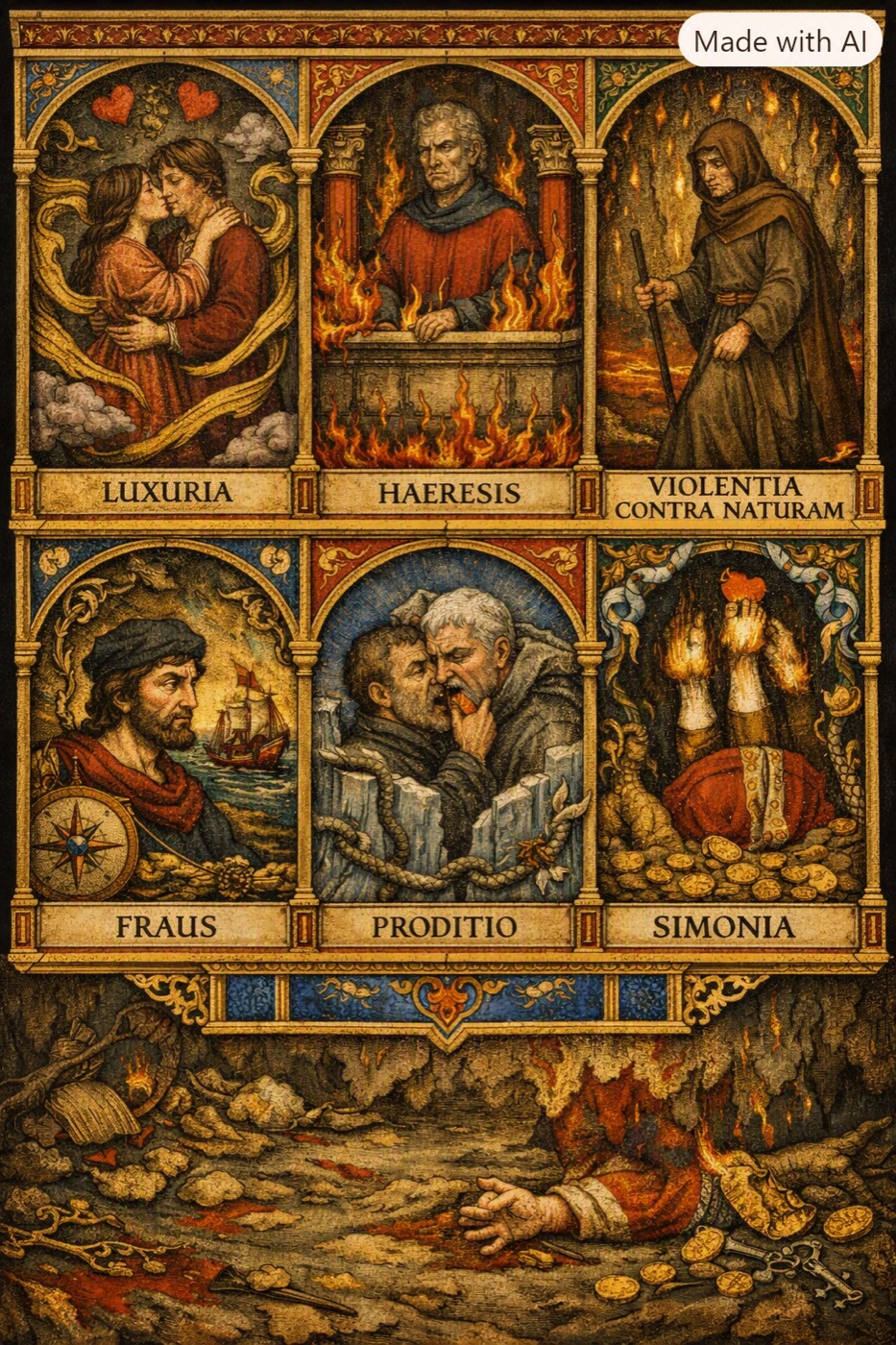
- Incontinence: Souls swept by chaotic winds and rain, symbolizing lack of self-control. Figures reach upward but are carried away by stormy motion.
- Violence: A fiery landscape divided into three zones: a river of boiling blood, a forest of twisted trees, and a burning desert under falling flames.
- Fraud: A labyrinth of bridges and ditches (Malebolge) where serpents, demons, and deceivers writhe in shadow.
The Architecture of Hell
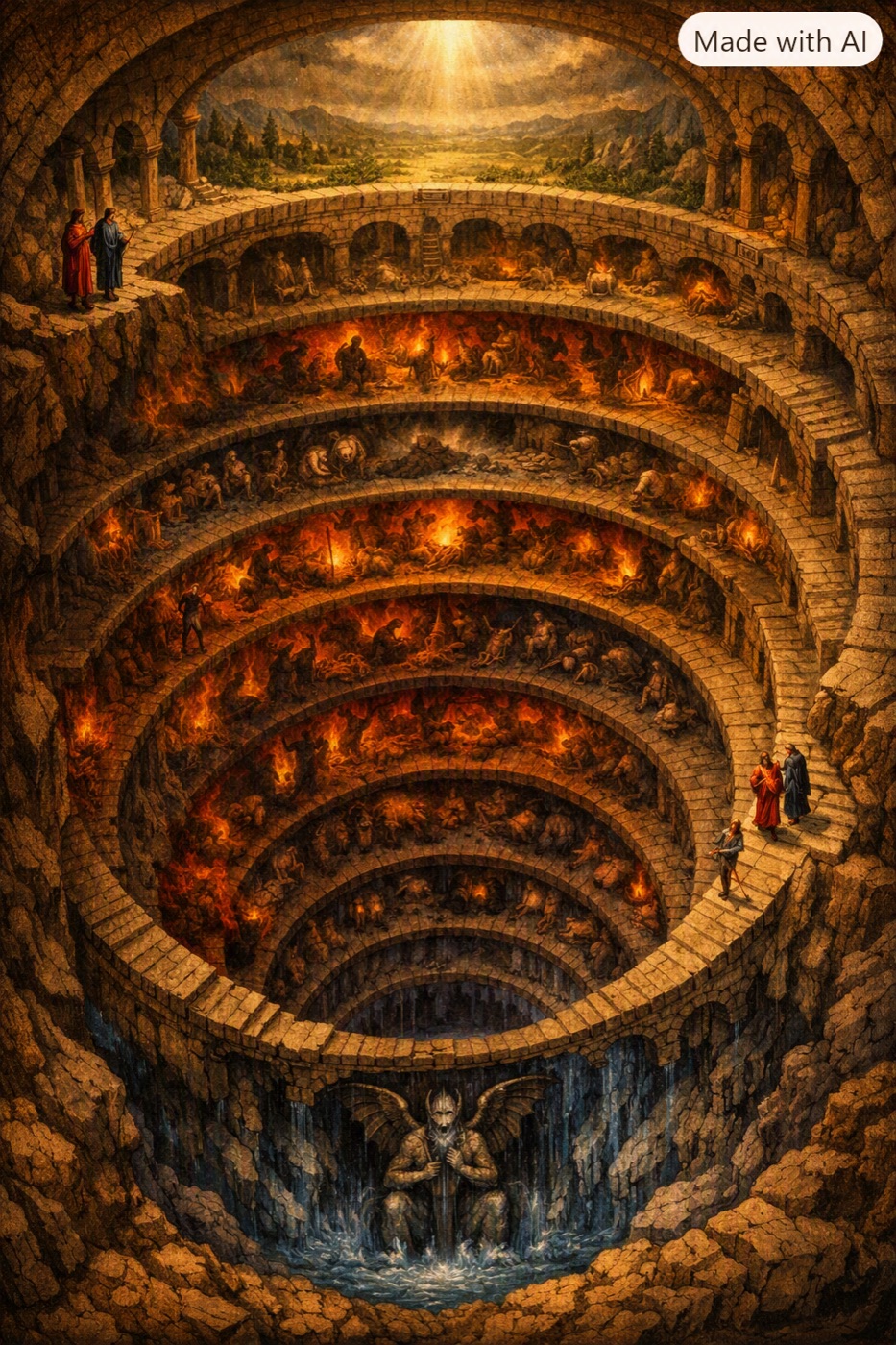
- Funnel-shaped pit beneath Jerusalem
- Nine circles arranged by gravity of sin
- Increasing distortion of love and reason
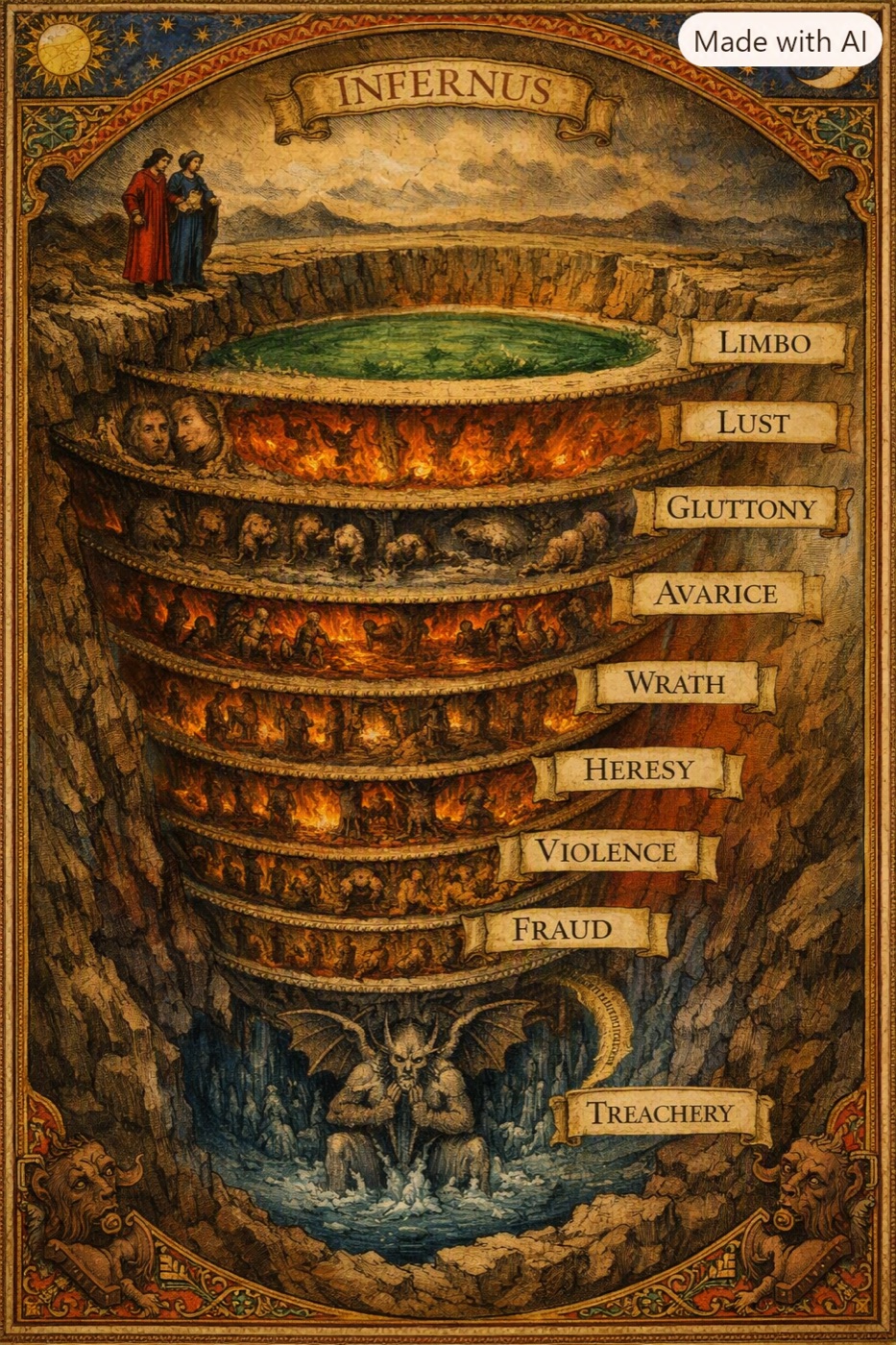
The Nine Circles
- Limbo (A dark, Hades-like realm)
- Lust (Winds)
- Gluttony (Garbage snowing down)
- Avarice (Rolling great weights)
- Wrath (Marsh of the Styx)
- Heresy (Red-Hot Tombs)
- Violence (Phlegethon, Suicides’ Wood, Desert)
- Fraud (Malebolge)
- Treachery (Cocytus)
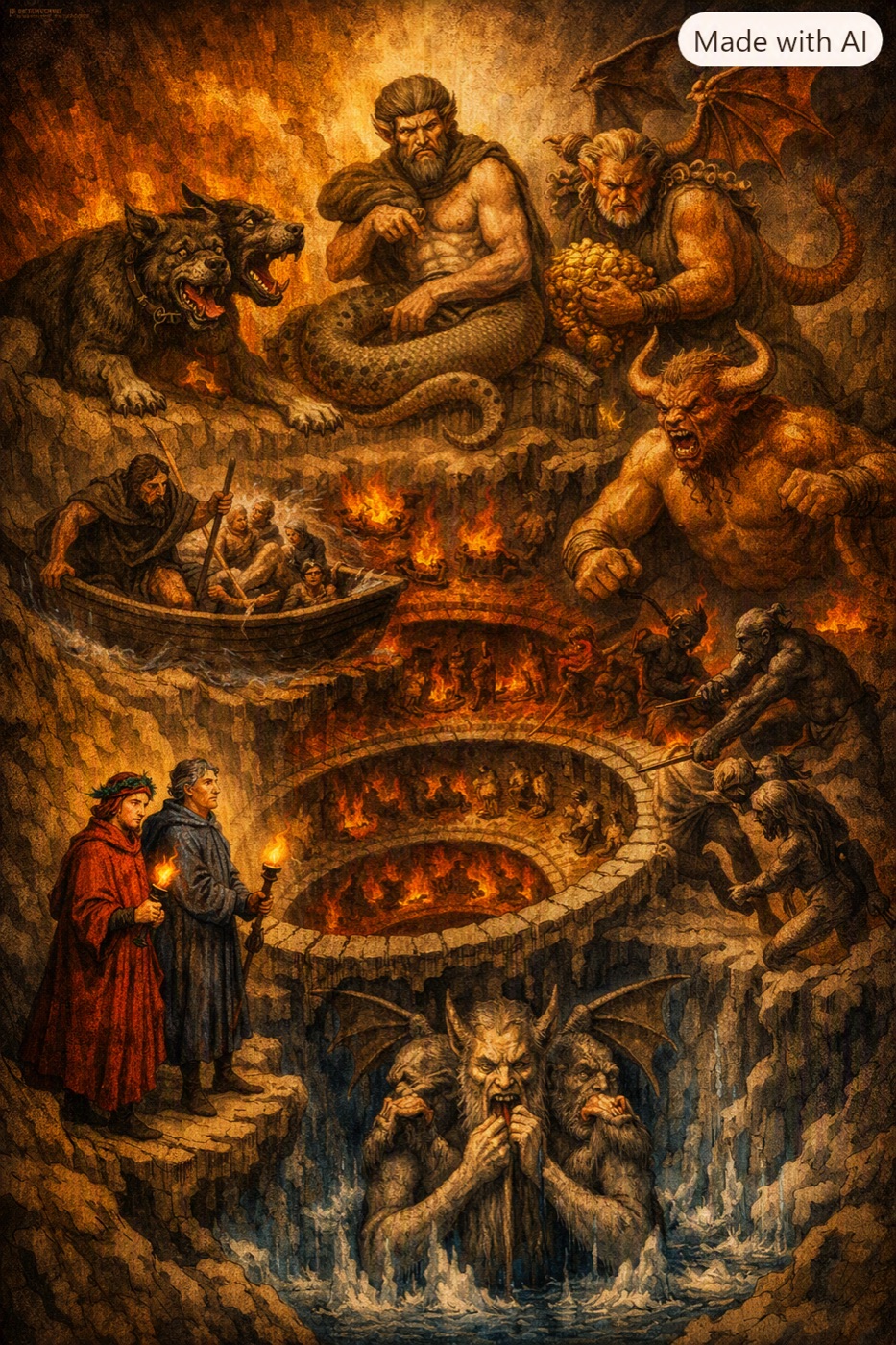
The Guardians
- Charon ferrying souls into Hell (not shown)
- Minos coiled around the entrance, judging souls with his tail.
- Cerberus snarling over the gluttonous.
- Plutus looming with golden hoard.
- Phlegyas steering his boat across the Styx.
- The Fallen Angels guarding the walls of Dis (not shown)
- The Minotaur raging at the edge of the violent circle.
- Geryon descending with patterned wings and serpent tail.
- The Giants standing in wells, many of them chained.
- Lucifer frozen at the bottom, three faces devouring traitors.
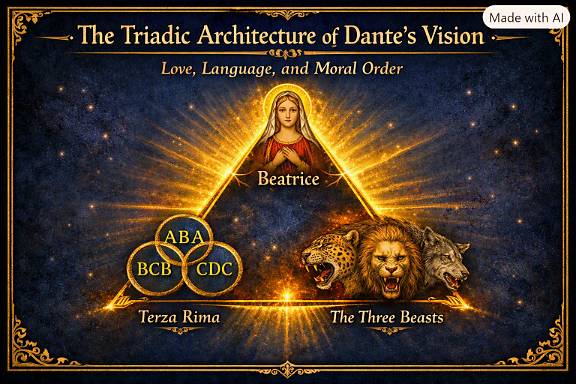
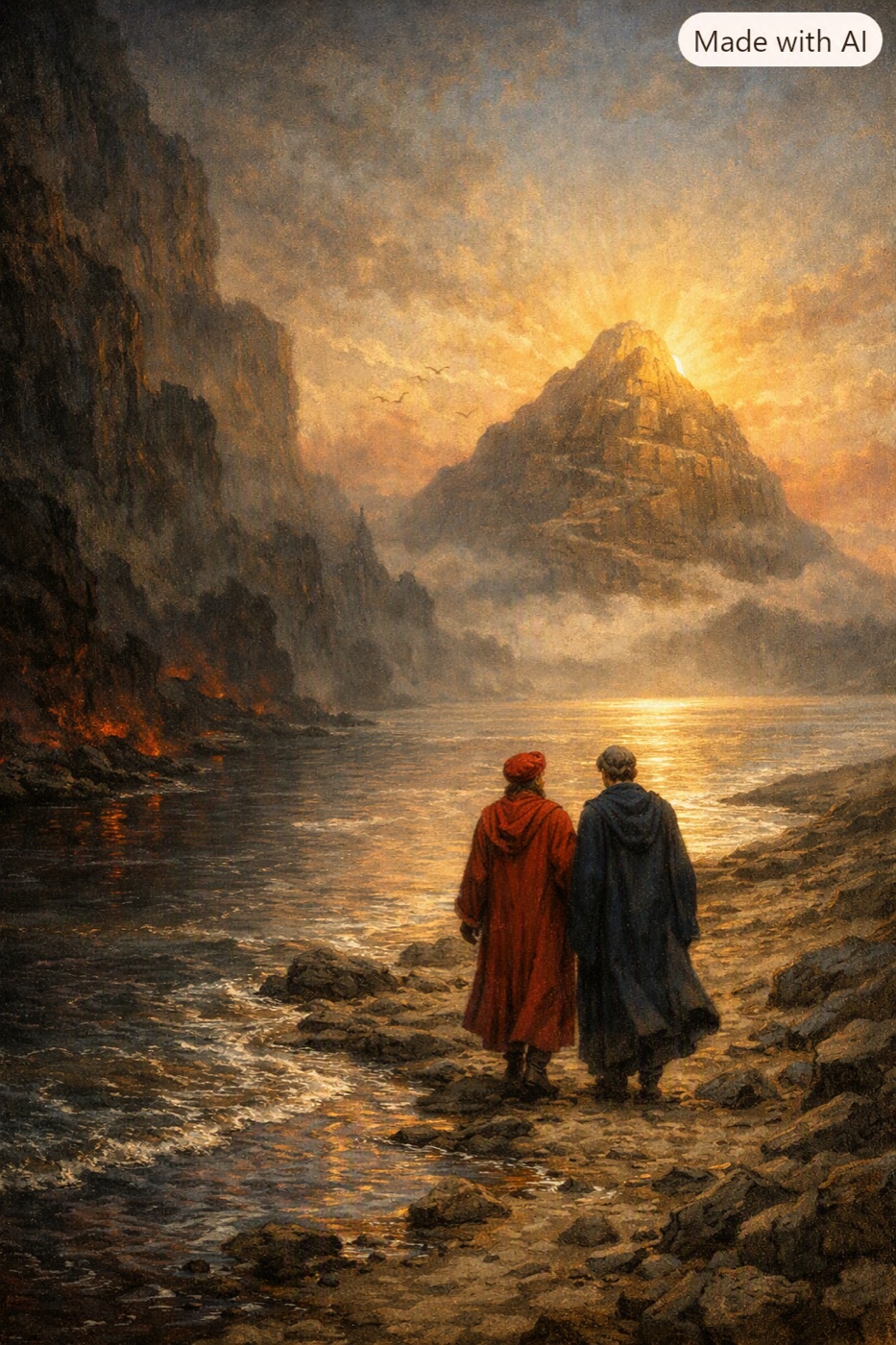
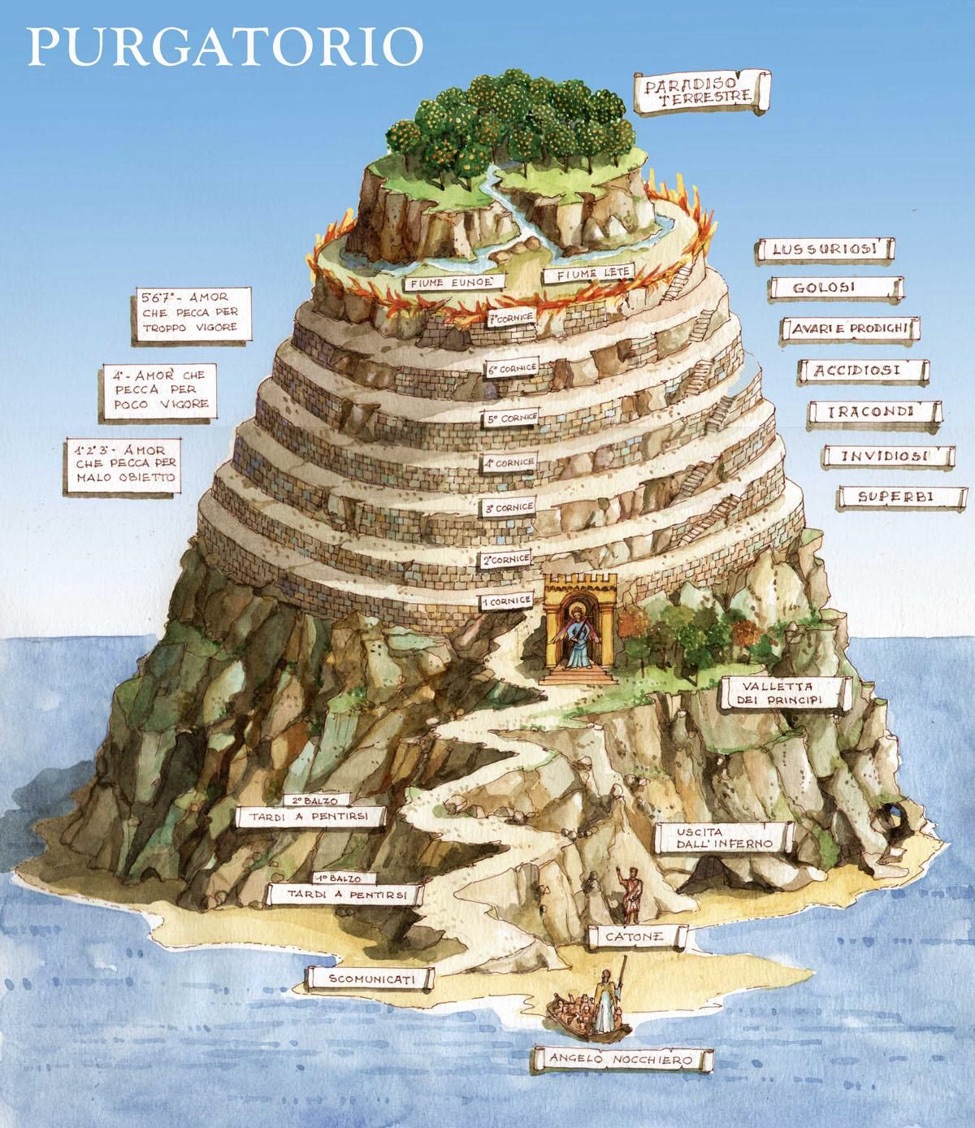
Transition from Inferno to Purgatorio
- Repentance
- Intervening grace:
- Healing
- Reordered love
- Virtue restored